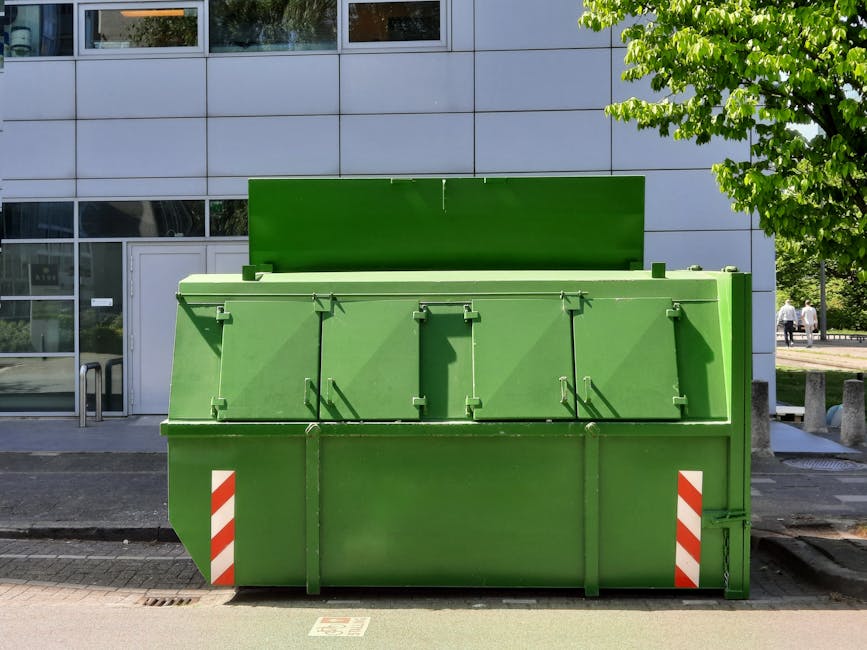
Permit requirements for skip hire Kingston Council
Posted on 17/08/2026
Permit requirements for skip hire Kingston Council: what you need to know before booking a skip
If you are planning a clear-out, a renovation, or a garden project in Kingston, the permit requirements for skip hire Kingston Council can catch you out quickly. One minute you are comparing skip sizes, the next you are wondering whether a skip can sit on the road, who applies for the permit, and how long it all takes. Been there, honestly - and it is never the fun part of a project.
This guide breaks the whole thing down in plain English. You will learn when a skip permit is usually needed, how the process tends to work, what to check before you book, and how to avoid the classic mistakes that create delays or extra cost. If you want the practical side of waste removal too, you may also find it useful to compare broader options through the services overview or read about Kingston Council rules for bulky waste kerbside collection for context alongside skip hire.
Why Permit requirements for skip hire Kingston Council Matters
A skip is simple in theory: it arrives, you fill it, it leaves. In reality, where the skip is placed makes all the difference. If it sits on private land, such as a driveway or garden, you usually have fewer permission issues. If it needs to go on a public road, parking bay, or another shared highway space, that is where permit requirements matter.
Why does this matter so much? Because placing a skip without the right permission can lead to problems that are easy to avoid and irritating to fix. Council action, complaints from neighbours, blocked access for residents or deliveries - it all becomes very real very fast. And if you are in a busy part of Kingston, where parking is already tight and road space is precious, the practical side matters as much as the paperwork.
There is also a customer-experience angle here. People often plan a weekend clear-out, forget about the permit, and then lose a day chasing details. That is exactly the sort of snag that turns a neat plan into a stressful one. For projects with mixed waste streams - garden debris, old furniture, and builder's rubble all in one go - it can be worth checking whether a skip is the best fit at all, or whether a cleaner alternative such as waste clearance in Kingston or builders waste disposal in Kingston may be easier.
Expert summary: the permit question is not just admin. It affects timing, cost, access, safety, neighbour relations, and whether your waste collection stays legal and hassle-free.
How Permit requirements for skip hire Kingston Council Works
The basic principle is straightforward. If the skip stays entirely on private property, you may not need a council permit. If any part of it occupies public land, a permit is usually required. Public land can include the road outside your home, the verge, or certain parking spaces controlled by the council. That is the general rule, though the exact permission route depends on location and placement.
In practical terms, the process usually works like this:
- You decide where the skip will sit.
- You confirm whether that space is private or public.
- If public land is involved, a permit application is made.
- The council reviews the request and either approves it or asks for more information.
- Once approved, the skip can be delivered and placed where agreed.
Most skip hire firms will help with the permit process, or at least tell you what information they need. That said, the responsibility does not disappear just because the skip is being delivered by a contractor. It is worth reading the terms carefully and asking who is actually applying, who is paying, and what happens if the permit is delayed.
There are a few practical details that matter more than people expect. The skip often needs to be positioned safely with clear visibility, and it may need cones, lights, or reflective marking depending on where it is placed and how long it will remain there. If the road is narrow, if access is awkward, or if the area is already heavily parked, small issues become big ones. If you have ever tried to reverse a van into a cramped Kingston street on a wet evening, you will know the feeling - a bit tense, to be fair.
For people who need waste removed quickly, a skip permit can be the slowest part of the job. In those cases, it may be sensible to compare skip hire with rubbish collection in Kingston or Kingston junk removal services, especially where access is tight and the waste is ready to go in one visit.
Key Benefits and Practical Advantages
Understanding the permit requirements is not just about compliance. It also helps you plan the whole job better. A permit-aware booking can save time, reduce friction, and stop a simple job from becoming a headache.
- Cleaner planning: you know early whether the skip can go on the road or must stay on private land.
- Fewer delays: permit timing can be built into the project schedule.
- Lower stress: you are less likely to discover a problem after the skip is already booked.
- Better access management: especially useful in streets with limited parking or shared entrances.
- Safer placement: proper positioning reduces risk to vehicles, pedestrians, and neighbours.
There is another benefit people often overlook: budget control. Skip hire looks simple until you factor in permit fees, the possibility of extra waiting time, and the risk of choosing the wrong skip size. That is why some households and small businesses prefer a more flexible route such as waste disposal in Kingston or house clearance in Kingston, particularly if they want the waste gone in one go without managing roadside logistics.
Who This Is For and When It Makes Sense
This topic matters to a fairly wide group of people. If any of the scenarios below sound familiar, you are probably in the right place.
- Homeowners doing a clear-out: lofts, garages, sheds, and renovations create more waste than expected.
- Landlords and letting agents: end-of-tenancy clearances can move fast, especially if there is bulky furniture involved.
- Builders and trades: even small refurb jobs can generate rubble, timber, plasterboard, and packaging.
- Businesses: office moves, refurbishments, and stock removal may need an efficient waste plan.
- People with limited driveway space: if there is no private place to put a skip, road placement becomes the issue.
It also makes sense for anyone in a terraced street, a cul-de-sac with restrictive parking, or a property with awkward access. In Kingston, that could mean everything from a compact residential road near the centre to a property where the front is shared or always half-full with parked cars. If that sounds familiar, you may want to compare options like small van rubbish collection for Norbiton homes or driveway access problems for rubbish removals in Kingston before committing to a skip.
Step-by-Step Guidance
If you want to keep things calm and practical, use this sequence. It is not fancy, but it works.
- Check the intended location. Is the skip going on your own land, or does it need to sit on a public road or parking area?
- Estimate the waste volume. A smaller skip may be enough, and choosing the right size can save money and space.
- Ask about permit responsibility. Some hire firms apply for the permit, others expect the customer to do it, and some offer guidance only.
- Build in extra time. Do not plan the job around the assumption that everything will happen instantly.
- Confirm placement details. Ask where the skip can legally sit, whether lighting or markings are needed, and whether access needs to stay clear.
- Review the final hire terms. Look at hire duration, collection timing, prohibited waste, and whether extensions cost more.
- Prepare the site. Clear the intended area, move vehicles, and avoid creating a bottleneck for neighbours.
A small but useful habit: take a quick photo of the proposed spot before the skip arrives. It sounds almost too simple, but it helps if you need to explain access, width, or parking conditions to the hire company. On a muddy Tuesday morning in winter, that little photo can save a lot of back-and-forth.
If your job is more about a one-off property emptying than a long DIY project, you may also benefit from checking loft clearance in Kingston upon Thames or furniture removal in Kingston. Sometimes the smoother route is the one with fewer moving parts.
Expert Tips for Better Results
Here is the short version: plan for the awkward parts, not just the easy ones.
- Book early if the skip may be road-based. Permit timing can affect the delivery date.
- Ask whether the skip needs cones or reflective marking. It is better to confirm than assume.
- Keep the load level. Overfilling a skip can create collection problems and safety issues.
- Separate reusable items before loading. This can reduce waste and may save space.
- Match the method to the access. Some properties are simply better suited to man-and-van clearance than a roadside skip.
Another tip that sounds obvious but still gets missed: check for overhead obstacles. Low trees, cables, gates, or tight turns can all complicate delivery. In a crowded street, even a perfectly legal placement can be awkward if the lorry cannot manoeuvre cleanly. The best skip hire is the one that avoids drama before the first bin bag is lifted.
If your project includes green waste, you may find it more efficient to use a dedicated service such as garden waste removal in Kingston or KT2 garden waste disposal service rather than mixing everything into a larger roadside setup.

Common Mistakes to Avoid
Most problems with skip hire are not dramatic. They are usually small mistakes that snowball.
- Assuming a permit is unnecessary: if the skip touches public land, do not guess.
- Leaving the permit check until the last minute: this can delay the whole booking.
- Choosing the wrong size: too small means repeat hire; too large means wasted budget and space.
- Ignoring access issues: delivery vehicles need room to manoeuvre safely.
- Overfilling the skip: that can lead to refusal at collection.
- Mixing restricted waste with general rubbish: some items need separate handling.
One of the sneakiest issues is hidden cost. Not every skip quote includes every extra, and permit-related fees may not always be obvious at first glance. If you want to avoid that sort of surprise, it is worth reading how to avoid hidden rubbish removal fees in Kingston and comparing it with the Kingston rubbish removal price guide. A few minutes of checking can save a fair bit of annoyance.
Tools, Resources and Recommendations
You do not need specialist tools to understand skip permissions, but a few practical resources and habits make life easier.
- Site photos: useful for showing access, road width, and parking conditions.
- Measurements: rough width and length of the intended skip space help avoid guesswork.
- Project notes: list the type of waste and estimated volume before you request a quote.
- Booking checklist: keep a note of who is handling the permit, when delivery is due, and when collection is scheduled.
- Alternative waste options: compare skip hire with direct clearance or mixed-waste collection if the site is tight.
For local customers, useful reading includes pricing and quotes, recycling and sustainability, and waste carrier licence and compliance. These pages help build a clearer picture of how a responsible waste service should operate, especially if you care about lawful disposal and not just getting stuff out of the way.
Law, Compliance, Standards, or Best Practice
Because skip placement can involve public highway space, the legal and compliance side matters. The exact rules can vary depending on location and the nature of the placement, so it is sensible to treat council permission as a formal requirement rather than a casual admin step.
In practice, the safest approach is this:
- Do not place a skip on public land without permission.
- Confirm whether the hire company or customer is responsible for the permit.
- Make sure the placement does not create a safety risk.
- Keep waste within the agreed hire conditions.
- Use a licensed waste carrier for removal and disposal.
That last point is easy to overlook, but it matters. If waste is collected by the wrong operator and ends up fly-tipped, the original waste producer can end up dealing with the fallout. Nobody wants that. If compliance is important to your business, the page on commercial waste removal in Kingston is also worth a look, especially where records, duty of care, and responsible handling are part of the decision.
Best practice also includes safety planning. A skip should not block emergency access, create trip hazards, or force pedestrians into the road. In busy residential streets, this is not just considerate - it is the difference between a smooth hire and a complaint from day one.
Options, Methods, or Comparison Table
If you are trying to decide between skip hire and another waste solution, the most useful question is not "Which is cheapest?" It is "Which one fits this site, this waste, and this timeline?"
| Option | Best for | Permit risk | Main advantage | Possible drawback |
|---|---|---|---|---|
| Skip on private land | Driveways, gardens, private forecourts | Usually low | Straightforward and flexible | Needs enough space |
| Skip on public road | Homes with no private space | Usually higher | Convenient where access is limited | Permit timing and extra admin |
| Man-and-van clearance | Quick removals, mixed bulky waste | Usually lower | No skip taking up space | Less suitable for ongoing filling |
| Dedicated rubbish collection | Smaller jobs, same-day needs | Low | Fast turnaround | May not suit heavy builder's waste |
For many Kingston households, the choice comes down to access. A clear driveway can make skip hire very convenient. A narrow road with constant parking? Not so much. In that case, direct collection or a fuller clearance service may simply be the calmer option.
Case Study or Real-World Example
Here is a realistic example from a typical local job. A homeowner in a terraced Kingston street wanted to clear a mix of old furniture, bags of renovation waste, and garden cuttings before a small refurbishment. The back garden had no vehicle access, and the front drive was too short for a skip. The road outside was busy and parking was tight by late morning.
At first glance, a skip seemed sensible. But once the access was checked properly, the permit requirement and placement issues became obvious. The road space needed permission, the delivery window would have to be planned carefully, and the homeowner would have had to keep the area clear for the lorry. After a bit of discussion, the job was shifted to a direct clearance approach instead. Less waiting, less admin, less risk of awkward parking arguments with neighbours over tea on a Saturday.
That is the real value of understanding permit requirements early. You are not just ticking a compliance box. You are choosing the method that fits the property, the street, and the deadline.
Practical Checklist
Use this before confirming a booking:
- Have you checked whether the skip will sit on private land or public land?
- Do you know who is responsible for the permit application?
- Have you allowed enough time for approval before delivery?
- Do you know the size of skip you actually need?
- Have you checked access for the delivery vehicle?
- Will the skip block parking, bins, gates, or emergency access?
- Have you confirmed any lighting, cones, or safety marking requirements?
- Do you know what waste types are allowed?
- Have you compared skip hire with a direct clearance alternative?
- Have you checked the hire terms for collection, extensions, and extra charges?
If you can answer yes to most of those, you are in much better shape than the average last-minute booking. That is usually enough to keep the day calm.
Conclusion
The permit requirements for skip hire Kingston Council are not complicated once you break them into practical steps. The key question is simple: is the skip staying on private property, or does it need to go on the road or another public space? From there, the rest becomes a matter of timing, access, safety, and clear communication.
In real life, the best outcome usually comes from planning a little earlier than you think you need to. Check the location, confirm who handles the permit, and compare skip hire with other waste removal options if access is tight. That small bit of preparation can save a lot of stress later - and let's be honest, nobody misses the extra headache.
Get a free quote today and see how much you can save.
And if you are still weighing up the best route for your project, take your time. The right waste solution should feel practical, safe, and surprisingly straightforward.